Extinguisher Compliance

Active-Duty Firefighter, 17 Years
Ask most business owners when their fire extinguishers are due, and you will hear the same answer: once a year, when the technician comes to tag them.
That annual tag matters. It is also one of four deadlines that NFPA 10, the national standard for portable fire extinguishers, puts on every unit in your building. Nobody puts the other three on your calendar, and when one slips, you usually find out from a fire marshal or an insurance inspector instead of your vendor.
Matt and Jack built Sparker after a combined 25+ years in the fire service, and we have seen what happens when an extinguisher fails the one time someone reaches for it. Here is the full schedule in plain English.
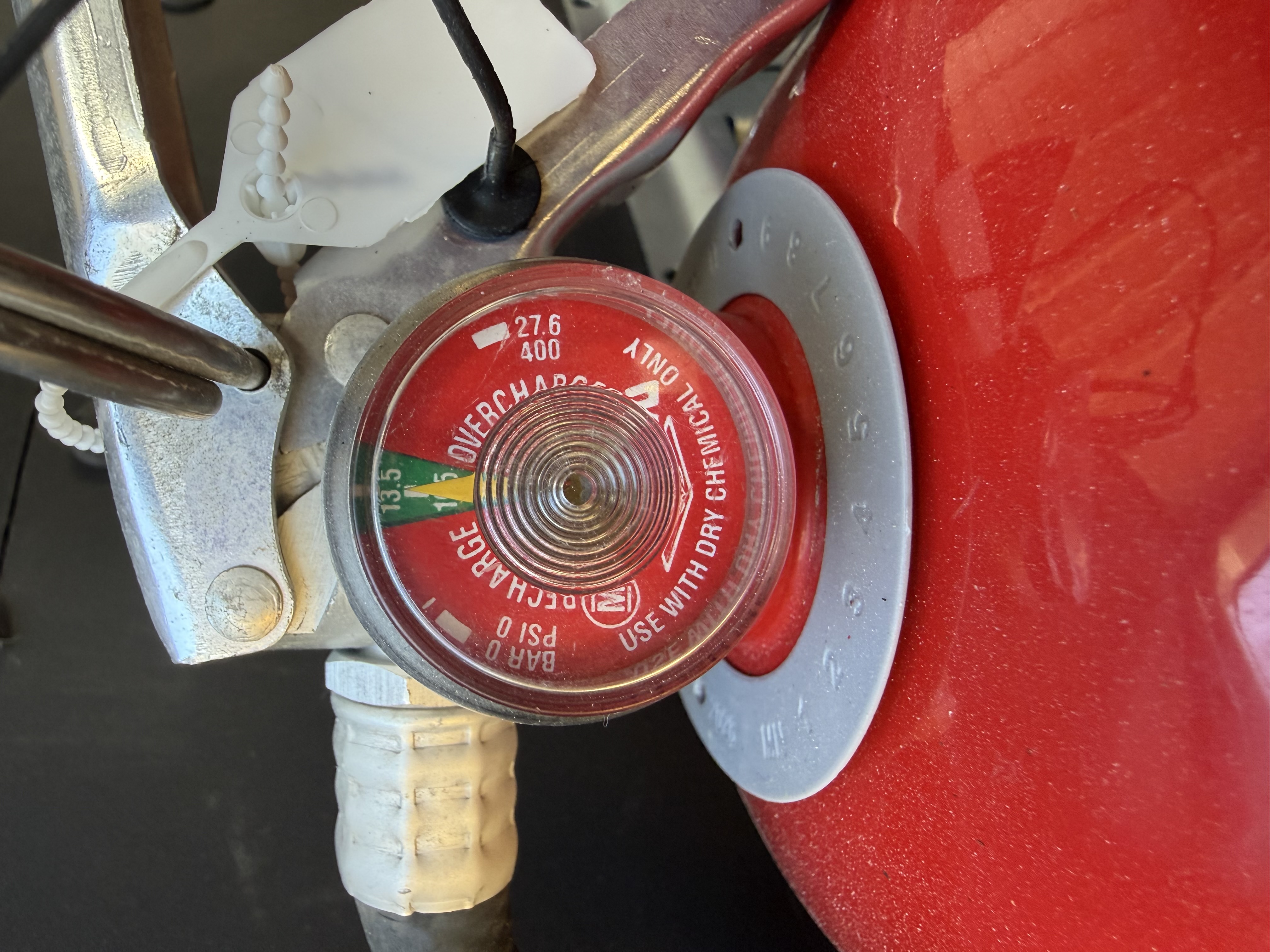
This one surprises people. NFPA 10 calls for a quick visual check of every extinguisher about every 30 days, and the building owner or staff does it, not your fire protection company.
It takes less than a minute per unit. You are checking three things:
Write the date and your initials on the tag or in a log. That record shows an inspector the checks are happening. We walk through the monthly check step by step in the next post in this series.
This is the one everybody knows. Once a year, a certified technician services each extinguisher to NFPA 10 and puts a new tag on it. That tag is the first thing your fire marshal looks for.
A good annual visit goes past the tag. The technician should confirm that each unit is the right type for the hazard near it, hung at the right height, and easy to find. More on that below.
Most dry chemical extinguishers, the red ABC units you see in offices, warehouses, and shops, need a full internal examination every six years. The technician empties the unit, inspects the inside, replaces worn parts, refills it, and returns it to service with a new label.
The annual tags can keep getting renewed while this date passes quietly, because the six-year mark only shows up if someone checks the dates on the unit itself.
Every 12 years, those same extinguishers need a hydrostatic test. The cylinder is pressure tested to confirm it can still safely hold its charge. A cylinder that passes is recertified, and one that fails comes out of service and gets replaced.
We see this one come due most often in older buildings and warehouses, where the extinguishers have been on the wall since the space was first set up.
If you run a restaurant, food truck, or any commercial kitchen, your Class K wet chemical extinguisher runs on its own five-year service cycle, separate from your ABC units. Your hood suppression system has its own semi-annual inspection on top of that. Kitchens get their own post later in this series.
Expired dates are one problem. Three others come up on our walkthroughs again and again:
None of these shows up on an invoice. They show up when someone walks the whole building with the code in mind.
That walk is what we call the Compliance Walk. On every new account, before we service a single unit, we walk your facility and check placement, mounting height, signage, and dates against what NFPA 10 requires for your specific space. Then we track every deadline on every unit, so the next one does not sneak up on you.
The response we hear most after that first walk is, "Nobody has ever explained that to us before."
If you would like us to walk your building, click Book Now on our home page. If you would rather talk it through first, call us at 205-728-7975. Sparker is an Alabama-based, firefighter-owned company, and Matt and Jack will give you a straight answer either way.